








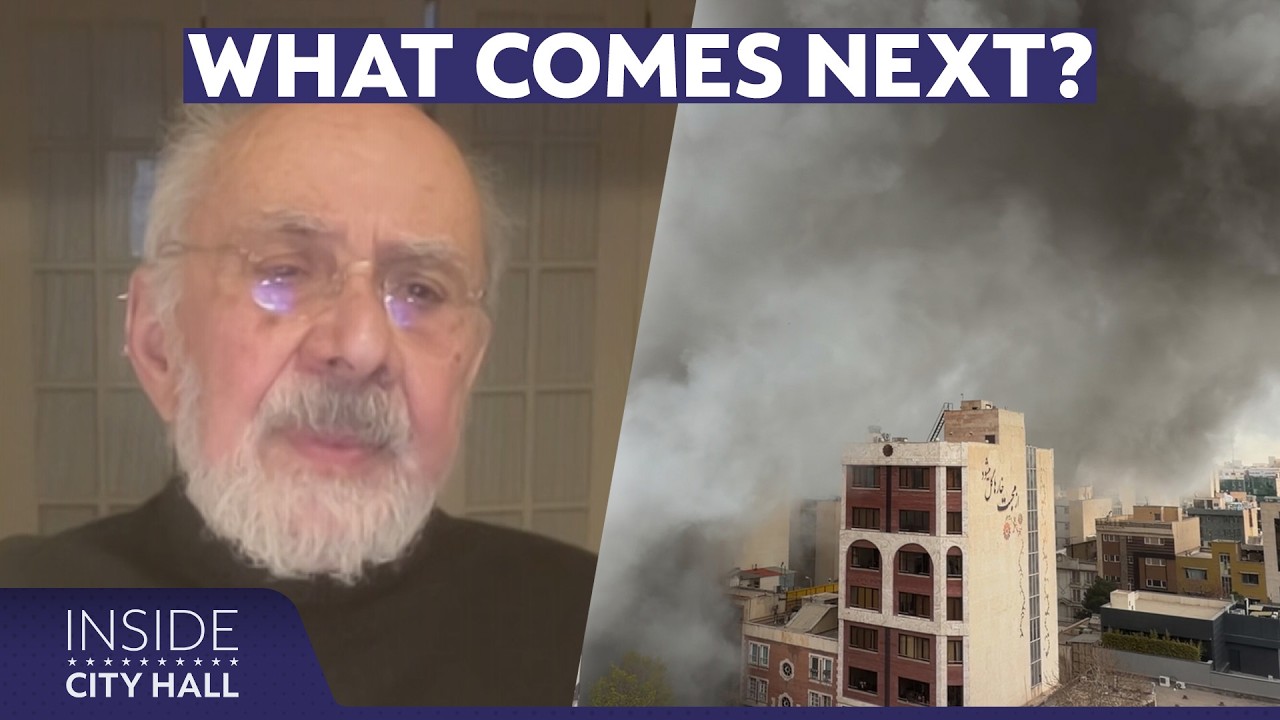
In this segment of Inside City Hall, Professor Ervand Abrahamian of Baruch College discusses the ongoing conflict with Iran and the feasibility of regime change .
Key points include:
- Challenges of Regime Change: Professor Abrahamian states that the death of the supreme leader would be a “bump” rather than a turning point, as the Iranian regime is highly bureaucratized and has institutionalized authority (1:13). He emphasizes that there is no organized opposition within Iran capable of taking over the government (1:27).
- Revolutionary Guards’ Loyalty: He explains that the Revolutionary Guards are ideologically committed and would not lay down their arms, as it would be “suicide” for them (2:37). He also notes that a military coup by the Revolutionary Guards would likely result in a worse situation for the U.S. and Israel (5:33).
- Lack of U.S. Subversion Tactics: The professor highlights the absence of traditional U.S. subversion tactics like spycraft or funding opposition, noting that regime change through bombing campaigns has not historically succeeded (4:13).
- Concessions and Nuclear Deal: He discusses that the previous Iranian leader was willing to make concessions, and the Obama-era nuclear agreement effectively prevented Iran from obtaining nuclear weapons (6:22).
- International and Domestic Support: Professor Abrahamian concludes by stating that there is little international support for the war, and public opinion in the U.S. will likely turn against it if civilian casualties continue (7:27).
Sources: NY1 and Spectrum News , Big New York news BigNY.com