
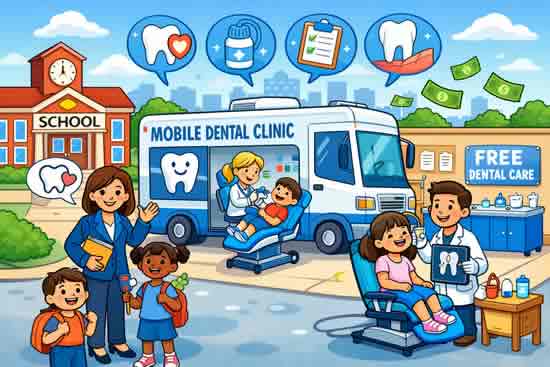
New York State will invest $10 million to expand dental services at 33 school-based health centers over five years, aiming to improve children’s oral-health outcomes—especially in low-income and high-risk communities. The funding supports on-site, mobile, and portable school dental programs that provide preventive and restorative care such as screenings, sealants, and treatments, while covering staffing, equipment, and costs not reimbursed by insurance to reduce out-of-pocket barriers for families. Participating operators must report service metrics and outcomes to support statewide evaluation and accountability as part of Governor Hochul’s broader children’s health agenda.
As part of Governor Hochul’s ongoing commitment to expand access to preventive health care services for children, the New York State Department of Health today announced $10 million to enhance dental care services at school-based health centers and improve oral health outcomes for children across the state.
“Our administration’s children’s health agenda is about ensuring that our youngest and most vulnerable have access to the care they need,” Governor Hochul said. “With this investment, we are meeting children where they are to provide dental services and set them on the path for a healthy life.”
New York State Health Commissioner Dr. James McDonald said, “Oral health is critical to overall health. Thanks to Governor Hochul’s leadership, we are supporting healthy habits and improving access to preventive dental care at an early age. Practicing good oral hygiene, including routine brushing twice daily and flossing, and having access to preventive oral health care can prevent or reduce tooth decay in children and positively affect their overall health.”
This initiative stems from Governor Hochul’s 2024 State of the State and supports the broader children’s health agenda. School-based health centers deliver free comprehensive primary and preventive health care to children in low-income and high-risk communities and utilize interdisciplinary care teams composed of nurses, nurse practitioners, physicians, physician assistants, dentists, dental hygienists, social workers, and other allied professionals.
The program includes dental services offering preventive and restorative oral health care — including screenings, sealants, and treatments — delivered directly within schools through:
- Fixed sites located inside school buildings.
- Mobile dental clinics brought onto school property.
- Portable dental setups in designated spaces within schools.
This funding will:
- Support dental service delivery, especially for students lacking access to regular oral care;
- Offset costs that are not covered by insurance and would have otherwise been billed to the patient or their caregivers;
- Cover staffing costs such as dental hygienist salaries;
- Fund the purchase of equipment and supplies necessary for dental operations;
- Expand service capacity and reduce cost barriers in underserved communities; and
- Foster health equity by improving access for students in low-resource settings.
Funding will be distributed to 33 school-based health centers across the state over five years. To ensure transparency, accountability, and statewide evaluation efforts around oral health access, operators who accept the funds will be required to:
- Report on service delivery metrics, including those tied to dental service expansion;
- Submit documentation related to program impact, reach, and operational outputs; and
- Track and share outcomes related to sealants, screenings, and treatments delivered because of this funding.
Assemblymember Amy Paulin said, “Access to quality dental care is essential to a child’s overall health and development. I applaud Governor Hochul for investing in dental care at school-based health centers, which are a lifeline for children in low-income and underserved communities.”
The New York State Department of Health recognizes February as National Children’s Dental Health Month with a reminder to parents and guardians of the importance of regular dental checkups and preventive care. This funding is just one part of the overall mission to improve the health of New York’s kids. In 2024, Governor Hochul signed legislation allowing greater access to fluoride treatments for pediatric dental patients.
Fluoride protects teeth from cavities and helps heal early decay. Regular visits to a dental provider and daily use of fluoride in toothpaste and at the optimal level in public drinking water supplies are the best ways to protect against dental decay. When fluoride is added to community drinking water, it provides an effective, inexpensive, and safe way of reducing dental decay.
When there is not optimum fluoride in the water, fluoride drops, fluoride tablets, or a fluoride rinse may be given to your child. Be sure to talk to your dentist or pediatrician about fluoride supplements.
A child’s first set of teeth is as important as their permanent teeth. These teeth help a child eat and speak. They hold space for the permanent teeth. Tooth decay in baby teeth can lead to:
- Problems with sleeping, chewing and talking
- Infection and illness
- Difficulty learning
The American Academy of Pediatric Dentistry (AAPD) recommends that infants see the dentist for their first dental exam within 6 months of getting his/her first tooth or by their first birthday. After the initial dental visit, regular visits, based on the child’s oral health needs, are recommended. Additional information and recommendations for daily hygiene habits for specific age groups can be found on the Department’s Oral Health for Infants and Children web page.
Sources: Governor.ny.gov , Big New York news BigNY.com