
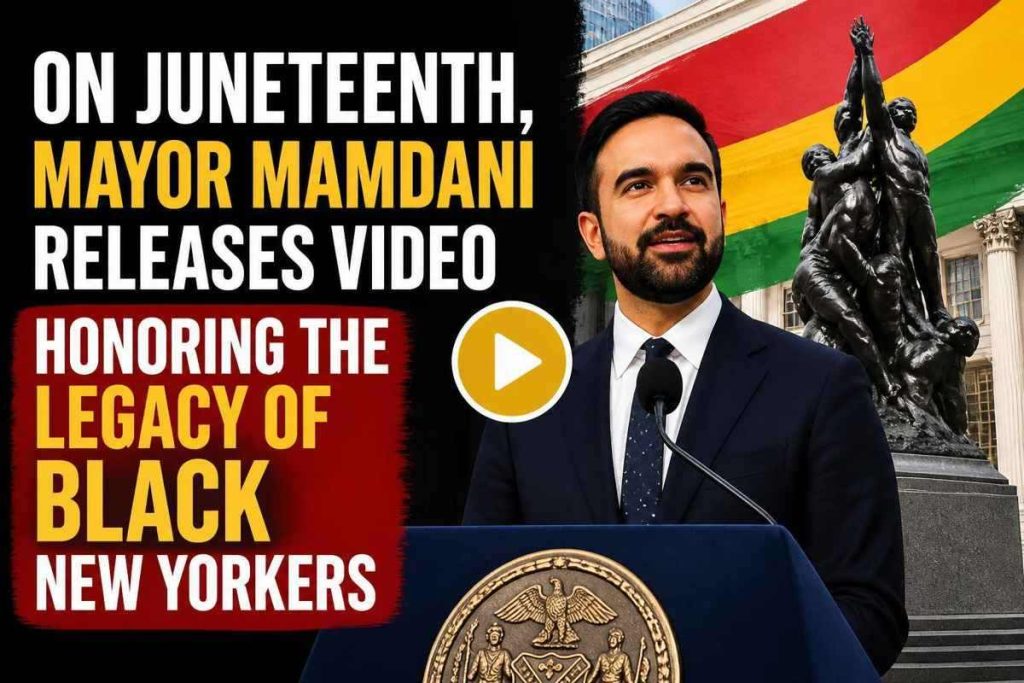
NEW YORK – Today, in recognition of Juneteenth, Mayor Zohran Kwame Mamdani released a short documentary highlighting the life and work of artist Dr. Lorenzo Pace, whose monumental sculpture, “Triumph of the Human Spirit,” stands in Foley Square as a testament to the resilience and enduring legacy of Black New Yorkers. The short documentary explores.
For New York readers, the key questions are what this official action changes in daily life, city services, public money, transportation, housing, safety, schools, or neighborhood access; who benefits; who pays; and whether the policy limits open competition or creates favored winners. The source material should be read as the official position unless other attributed responses are available.
If audits, lawsuits, opposition statements, procurement records, budget documents, or credible reporting show criticism or controversy, that criticism should be presented with attribution. Without such evidence, concerns should be framed as questions for residents and officials, not as proven accusations.
The original announcement was published by NYC Mayor on June 19, 2026. BigNY links to the official source so readers can review the full context directly.
Questions New Yorkers may ask
What is the main point for New York readers?
NEW YORK – Today, in recognition of Juneteenth, Mayor Zohran Kwame Mamdani released a short documentary highlighting the life and work of artist Dr. Lorenzo Pace, whose monumental sculpture, “Triumph of the Human Spirit,” stands in Foley Square as a testament to the resilience and enduring legacy of Black New Yorkers. The short documentary explores.
What should readers check next?
Readers should review the official source, budget details, public records, and any attributed opposition or community response.
Does this prove wrongdoing?
No. BigNY treats criticism and concerns as questions unless they are supported by named sources, official records, lawsuits, audits, court filings, investigations, or direct public statements.