
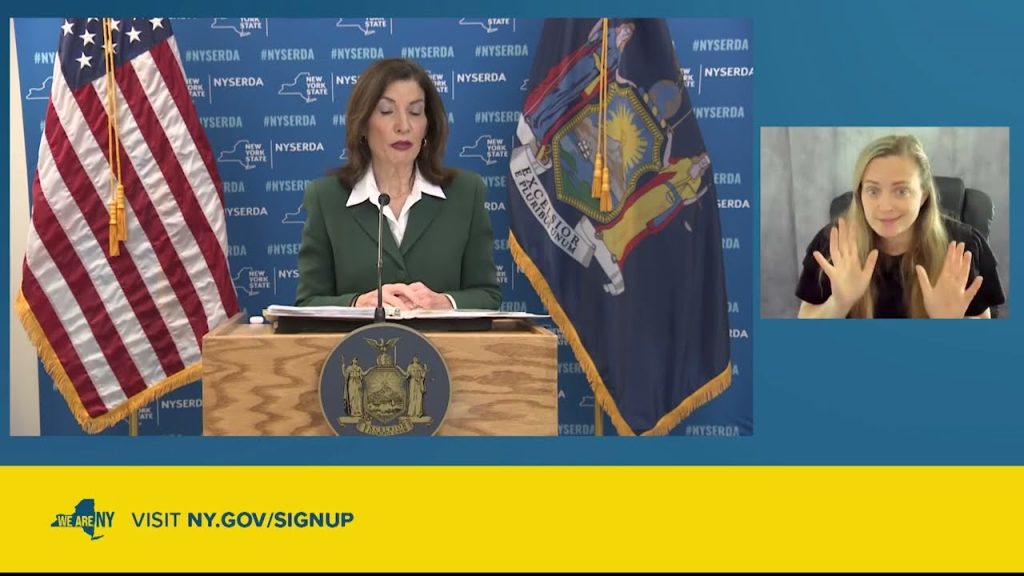
Video: Governor Hochul Delivers Remarks on Expanded Proposal to Protect New Yorkers Against ICE.
Y Moves to Limit ICE Cooperation While Expanding “Sensitive Locations” Protections
New York is moving toward a major shift in how state and local agencies interact with federal immigration authorities, as Governor Kathy Hochul pushes new policies aimed at limiting what she describes as “ICE overreach.”
The proposal builds on an initiative first introduced earlier this year and is now being expanded through ongoing negotiations with state lawmakers. At its core, the plan seeks to clearly separate local policing from federal civil immigration enforcement.
According to Hochul, local police should focus on “local crimes” — including violent offenses, gun trafficking, and emergency response — rather than assisting federal agencies in immigration matters. The governor emphasized that federal immigration enforcement is already funded at a national level and should remain a federal responsibility.
Key Restrictions on ICE Cooperation
One of the central elements of the proposal is a ban on so-called 287(g) agreements, which allow local law enforcement to act in cooperation with Immigration and Customs Enforcement (ICE). Under the new policy, New York agencies would be prohibited from entering such agreements.
Additionally, the plan would block ICE from using state and local resources for civil enforcement purposes. This includes:
- Local jails
- Police personnel
- Law enforcement technology funded by taxpayers
The proposal draws a clear distinction between civil immigration enforcement and criminal law enforcement. While cooperation would be limited in civil cases, officials confirmed that state and local agencies would continue working with federal authorities in cases involving serious or violent crimes.
Expansion of “Sensitive Locations”
Another key component of the proposal is the expansion of “sensitive locations,” where immigration enforcement activities would be restricted.
These locations may include:
- Public schools
- Libraries
- Youth centers
- Other state- or locally operated facilities
The goal, according to state officials, is to ensure that residents — particularly immigrant families — can access education and public services without fear.
The proposal also seeks to codify access to public education regardless of immigration status, reinforcing long-standing policies in New York.
Limits on Non-Criminal Enforcement
The plan would further restrict cooperation between local authorities and ICE in cases involving minor or non-criminal offenses.
For example, coordination would not be allowed in situations such as:
- Traffic violations
- Minor infractions like jaywalking
- Cases where the only issue is immigration status
State officials argue that these measures are necessary to prevent what they describe as misuse of local law enforcement resources and to maintain trust between communities and police.
New Rules for Law Enforcement Conduct
In a notable addition, the proposal includes a ban on law enforcement officers wearing face coverings while interacting with the public.
Hochul argued that transparency and accountability are essential, stating that officers enforcing the law should not conceal their identities — a standard already followed by most local and federal agencies.
Ongoing Negotiations
The proposal is still under discussion, with lawmakers reviewing details and negotiating final language. State officials say further updates are expected as the legislative process continues.
The governor framed the effort as part of a broader push to protect New York communities while maintaining a clear focus on public safety.
Video: Official Governor Kathy Hochul