
The 9-11 attacks and Russian FSB – KGB terrorists .. Is Putin was involved in Ben Laden plans and support ?
September 11 Attacks was Russian “collusion” ?
September 11 and Russia: Konstantin Borovoi Claims FSB and Putin Knew More Than the World Was Told
Russian politician Konstantin Borovoi claimed that Russian security services had knowledge of terrorist planning before 9/11 and alleged that Soviet-era intelligence networks sought to use Islamist extremism against the United States.
By Midtown Tribune
The September 11, 2001 attacks remain one of the defining tragedies in modern American history. Nearly 3,000 people were killed when al-Qaeda terrorists hijacked four commercial airplanes and struck the World Trade Center in New York City, the Pentagon in Virginia, and a field near Shanksville, Pennsylvania.
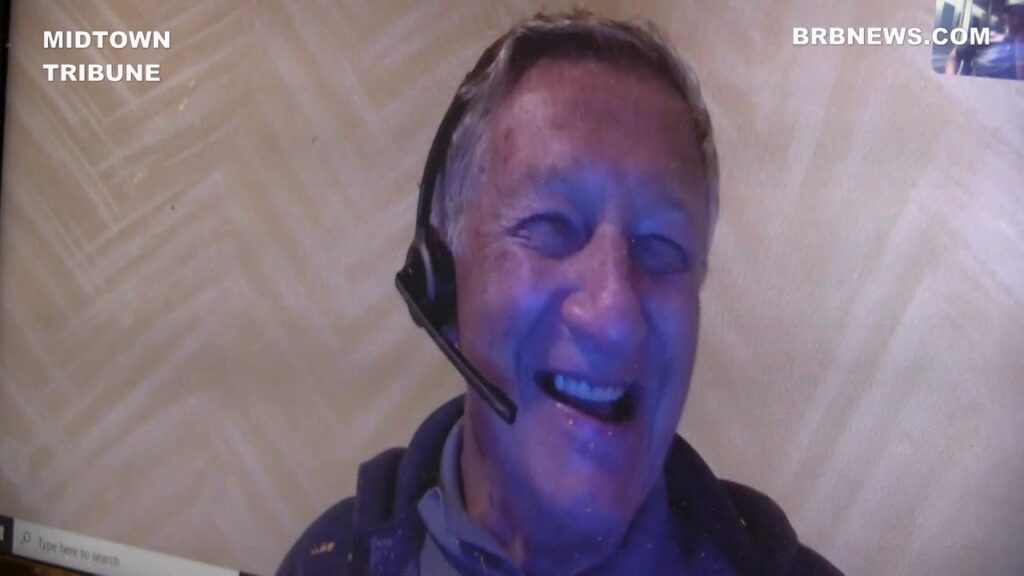
The official U.S. record identifies al-Qaeda and Osama bin Laden as the organizers of the attacks. But in a 2019 Midtown Tribune interview, Russian liberal politician and former State Duma member Konstantin Borovoi presented a darker and more controversial claim: that Russian security structures had advance knowledge of terrorist planning and that elements connected to Soviet and Russian special services were involved in supporting anti-American Islamist activity.
Borovoi did not merely speak about September 11 as a geopolitical event. He framed it as part of a broader confrontation between the United States and the old Soviet security establishment.
Borovoi’s Central Claim
In the interview, Borovoi said that in 1999, before Vladimir Putin became president of Russia, he was approached by two men who claimed to be connected to Russian military intelligence structures. According to Borovoi, these men discussed the Moscow apartment bombings and alleged that Russian special services were involved in violent operations that were publicly blamed on Chechen terrorists.
Borovoi said the men identified themselves as officers linked to GRU structures and spoke about cooperation or overlap between military and civilian Russian security services. In his account, they told him that Putin was trying to consolidate power through terror and fear.
The most explosive part of the interview concerns Osama bin Laden and al-Qaeda. Borovoi said the same sources told him in 1999 that bin Laden was preparing a terrorist operation in the United States. He said the plan involved aircraft and targets in New York City.
At the time, Borovoi said, the warning sounded almost unbelievable.
In his words, the idea that terrorists would use civilian airplanes to strike skyscrapers in New York sounded “crazy” in 1999. But after September 11, 2001, the warning took on a different meaning.
Warning to American Officials
Borovoi claimed that after receiving the information, he passed it to contacts at the U.S. Embassy and later traveled to Washington, D.C., in October 1999. He said a U.S. congressman from New York helped arrange a meeting with senior FBI officials.
According to Borovoi, he gave American officials information that bin Laden and al-Qaeda were preparing an attack against the United States using aircraft. He also claimed he told them that Russian special service structures had knowledge of, or involvement in, support networks connected to the preparation.
Borovoi said that years later, a congressional inquiry to the FBI received a polite answer confirming that the Bureau had received information from him, though he did not present the text of that correspondence in the video.
This remains one of the most important questions raised by the interview: if Borovoi’s account is accurate, what exactly did U.S. authorities receive in 1999, how specific was the warning, and what was done with it?
The Official Record and the Unanswered Questions
The official U.S. government conclusion is clear: the September 11 attacks were carried out by al-Qaeda. The 9/11 Commission Report identified Osama bin Laden, Khalid Sheikh Mohammed, and al-Qaeda’s international network as central to the planning and execution of the attacks.
The FBI also identifies the attacks as a coordinated al-Qaeda operation involving four hijacked planes.
Borovoi’s interview does not overturn that official record. Instead, it raises a separate question: whether other intelligence services, including Russian or former Soviet networks, had advance knowledge, indirect contacts, or strategic interest in the attack.
That distinction is important. Saying al-Qaeda carried out the attacks is not the same as saying no foreign security service had knowledge, influence, or contact with extremist networks before the attacks.
Borovoi’s allegation is not that Russian pilots flew the planes or that Moscow publicly directed the September 11 operation. His claim is more specific and more difficult to prove: that Russian security structures knew about the preparation and that former Soviet intelligence networks saw Islamist terrorism as a weapon that could be used against the United States.
Who Is Konstantin Borovoi?
Konstantin Natanovich Borovoi is a Russian liberal politician, businessman, and former member of the Russian State Duma. He was associated with the Party of Economic Freedom and later with the pro-Western political movement Western Choice.
In the 1990s, Borovoi was known as a sharp critic of the post-Soviet security establishment and of the rise of Vladimir Putin. In October 1999, he appeared before the U.S. House Committee on International Relations during a hearing on corruption in the Russian government.
That background matters. Borovoi was not a random commentator. He was a Russian parliamentarian who had access to political circles during the chaotic transition from Yeltsin’s Russia to Putin’s Russia. At the same time, his claims about 9/11 remain allegations unless supported by declassified documents, testimony, or official records.
Putin, the FSB, and the Politics of Fear
Borovoi connected his 9/11 claim to a larger argument about how Putin came to power. He referred to the 1999 apartment bombings in Russia, which killed hundreds and helped create the political atmosphere for the Second Chechen War and Putin’s rise.
Officially, those bombings were blamed on Chechen terrorists. Critics of the Kremlin have long alleged that Russian security services may have had a role in the events or used them politically. The Russian government has denied such accusations.
In Borovoi’s interpretation, the pattern was clear: terror, fear, emergency politics, and the strengthening of the security state.
He suggested that the same Soviet-style structures that used terror domestically could also exploit Islamist terrorism internationally.
Why This Interview Still Matters
The 2019 Midtown Tribune interview is controversial because it touches three extremely sensitive issues at once:
- The September 11 attacks and the failure to prevent them.
- The rise of Vladimir Putin and the role of Russian security services.
- The possible relationship between state intelligence structures and terrorist networks.
For American readers, the interview raises a question that remains politically uncomfortable: did U.S. agencies miss warnings before September 11 that should have been taken more seriously?
For Russian readers, it raises another question: how deeply were post-Soviet intelligence structures involved in shaping global instability during the late 1990s and early 2000s?
For New Yorkers, the topic is not abstract. The World Trade Center was not a symbol on a map. It was a real place in Lower Manhattan, filled with workers, families, immigrants, visitors, first responders, and ordinary people who began that Tuesday morning with no idea that history was about to break into their lives.
Allegation, Evidence, and Responsibility
Borovoi’s claims should be treated seriously but carefully. They are historically significant because of who made them, when he says he made the warning, and what later happened on September 11. But they are not the same as a court judgment or official U.S. government conclusion.
Responsible journalism must separate three categories:
Fact: al-Qaeda carried out the September 11 attacks according to the official U.S. record.
Documented background: Borovoi was a Russian parliamentarian and testified before the U.S. Congress in 1999 about corruption in the Russian government.
Allegation: Borovoi claims he warned U.S. officials in 1999 that bin Laden was preparing an aircraft-based attack against targets in New York and that Russian special service structures had knowledge of or involvement in support for such activity.
The interview is important precisely because it sits at the intersection of these three categories.
Conclusion
Konstantin Borovoi’s interview does not replace the official history of September 11. But it challenges journalists, historians, and intelligence researchers to ask whether the full international context of the attacks has ever been completely understood.
Were there warnings that were ignored? Did foreign intelligence services know more than they admitted? Did the old Soviet security world see Islamist terrorism as a tool against the United States?
More than two decades after September 11, these questions remain painful. But they are not irrelevant. For New York, for America, and for anyone studying the relationship between authoritarian regimes and terrorism, Borovoi’s allegations deserve renewed scrutiny — not as proven fact, but as a serious claim that should be tested against documents, congressional records, and declassified intelligence files.
Video: “September 11 and Russia, Konstantin Borovoi blames FSB and Putin” — Midtown Tribune, December 27, 2019.
Video Midtown Tribune